Cocoa Oil Sponge Cake Base
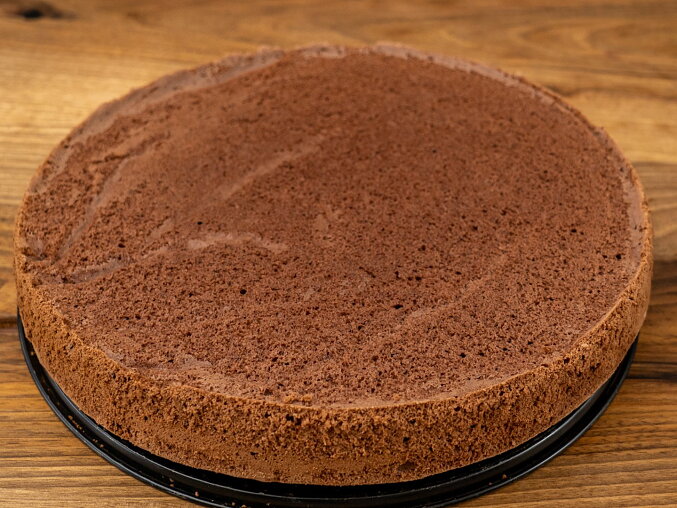
The cocoa oil sponge is a light base for cakes. The key is properly whipped egg whites, which give the batter its airiness. We will show you how to whip the whites to stiff peaks and how to fold the batter gently so that the sponge rises.
Prep: 30 min
Cook: 40 min
Servings: 1
Method
01.
Preparing the tin: Open the springform tin, place a sheet of baking paper on the base and close the base with the ring, letting the paper stick out. Lightly grease the sides and base with fat or spray oil. If using a non-stick tin, there is no need to flour it.
02.
Setting the oven: Set the oven rack so that the top of the tin will be roughly in the centre of the oven.
03.
Preheating the oven: Preheat the oven to 150 °C, top and bottom heat, or medium heat for a gas oven. Let it heat up.
04.
Whipping the egg whites: Separate the eggs into whites and yolks. Add a pinch of salt to the whites and whip on the highest speed. Once the whites are almost ready, add the sugar in stages while continuing to whip.
05.
Finishing the meringue: Whip the whites with the sugar long enough, about 5 minutes in total. When you lift the beaters, peaks should form and hold their shape. If you rush this stage, the sponge will not rise and will be a dense, heavy flat cake.
06.
Adding the yolks and oil: Gradually beat the yolks and oil into the stiff meringue on a low speed.
07.
Adding the flour and cocoa: Weigh the flour and cocoa and sift them through a sieve onto the egg mixture. For a light sponge, replace the cocoa with the same amount of flour. For a nut sponge, replace the cocoa with ground nuts; in that case add 1/2 baking powder.
08.
Mixing the batter: Sifting prevents lumps and aerates the flour. Carefully mix with a wooden spoon, preferably just folding the mixture over again and again until everything is combined.
09.
Preparing to bake: Transfer the batter to the tin and smooth it with a spatula, pushing it slightly towards the edges; leave the centre slightly sunken. It will even out during baking and will not form a dome on top.
10.
Baking: Carefully place the tin in the oven without knocking it and bake for 40 minutes. If the sponge starts to brown too much on top, place a piece of baking paper over it.
11.
Checking the sponge: After 40 minutes, carefully remove the sponge onto a wire rack and test with a skewer to see whether the batter in the centre still sticks. If the skewer is not dry when removed, return the sponge to the oven for a little longer.
12.
Finishing: Let the finished sponge rest on the wire rack for about 5 minutes, then run a knife around the sides to release any stuck batter. Open the tin and remove the ring. Let the sponge cool on the base of the tin, then turn it upside down, peel off the baking paper and the sponge is ready for further use.